Kramedic
HMO management software with separate portals for platform admins, HMO staff, hospitals and corporate clients, covering pre-authorisation, claims, enrollees, plans and billing.
- Role
- Product design and frontend engineering
- Year
- 2025
- Built with
- Next.js, TypeScript, Tailwind CSS, Radix UI, TanStack Query, TanStack Table, React Hook Form, Recharts
- Type
- B2B SaaS, product design and frontend
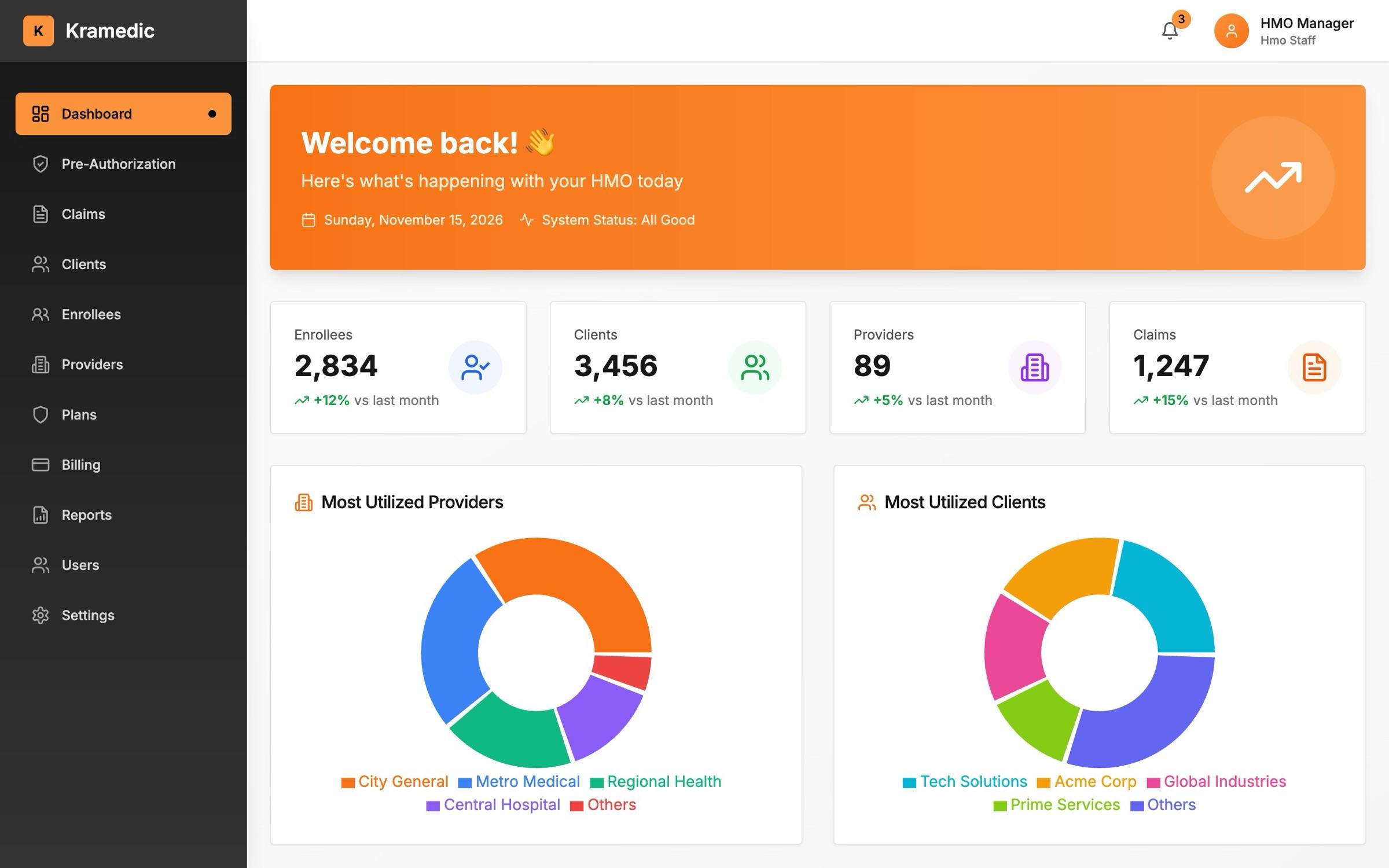
The brief
An HMO sits between employers, their staff and hospitals. Hospitals ask for approval before treatment, bill monthly in batches, then wait while the HMO vets each claim. Much of that still runs on spreadsheets, email and phone calls.
Kramedic puts every party in one system, each with a portal built around their own work, on a multi-tenant platform so several HMOs can run on it at once.
What I did
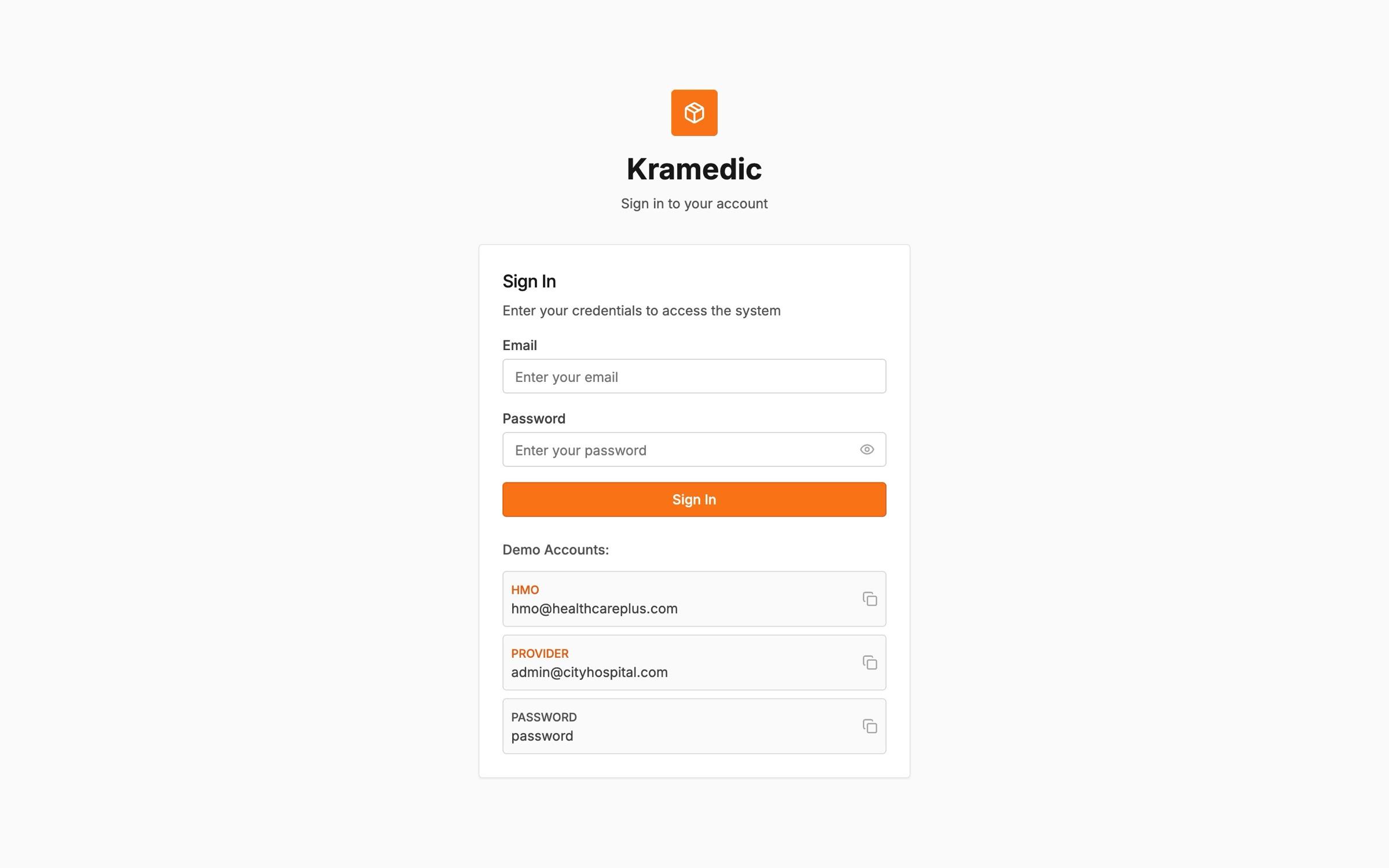
- Roles, permissions and portal structure for four types of user
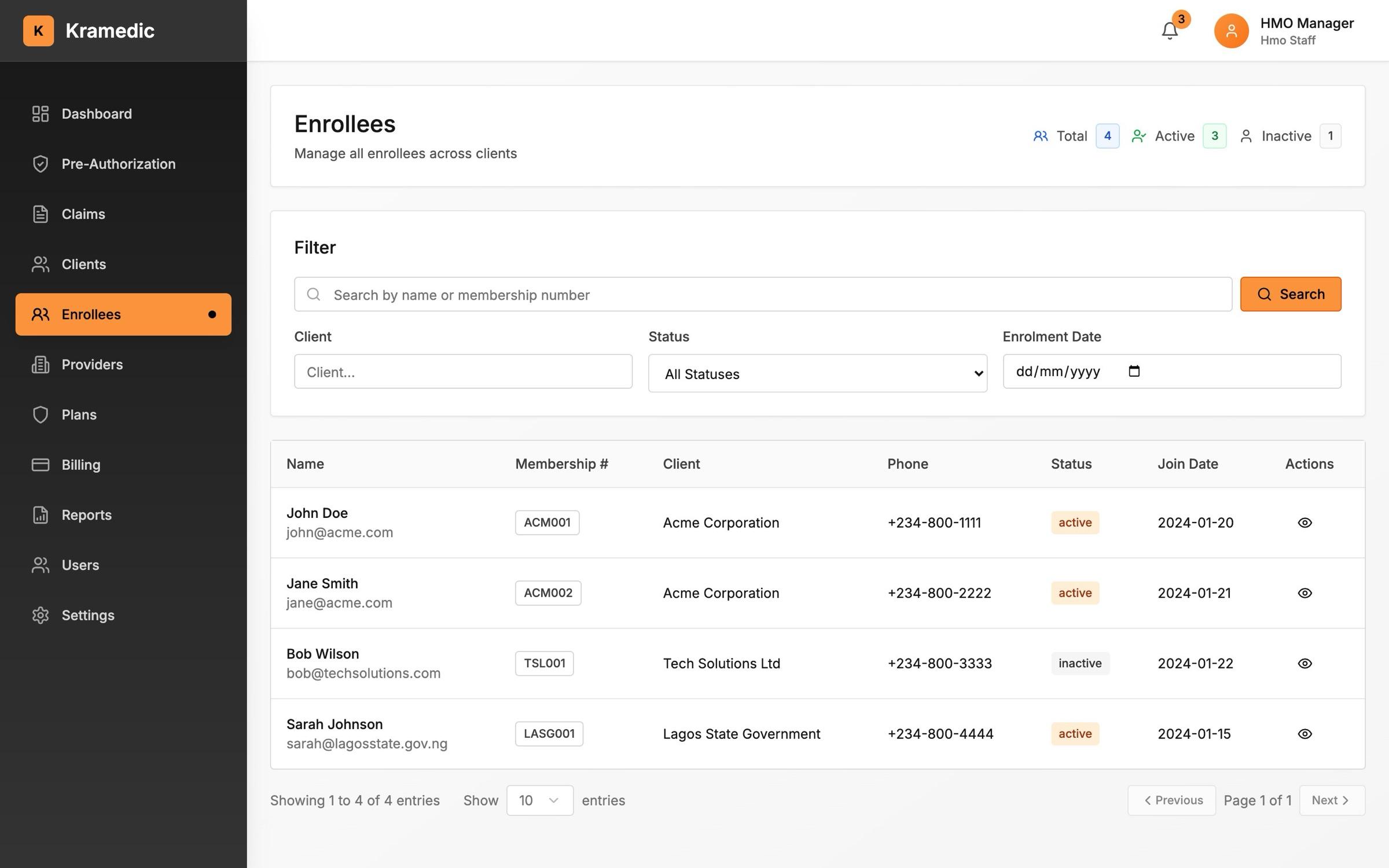
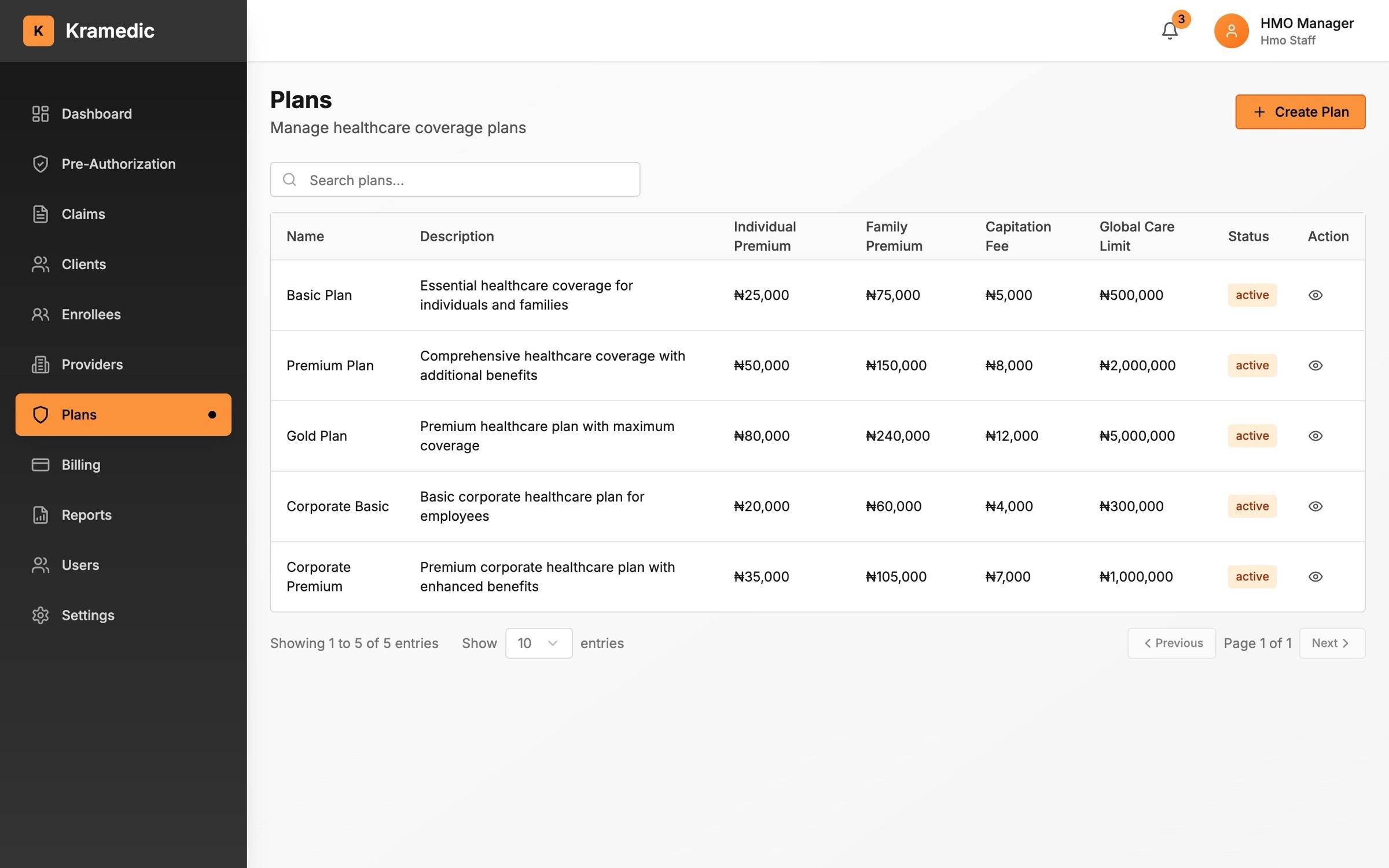
- HMO portal: pre-authorisation, claims, clients, enrollees, providers, plans, billing, reports and users
- Provider portal: claim submission, pre-authorisation requests, patients, tariffs and payments
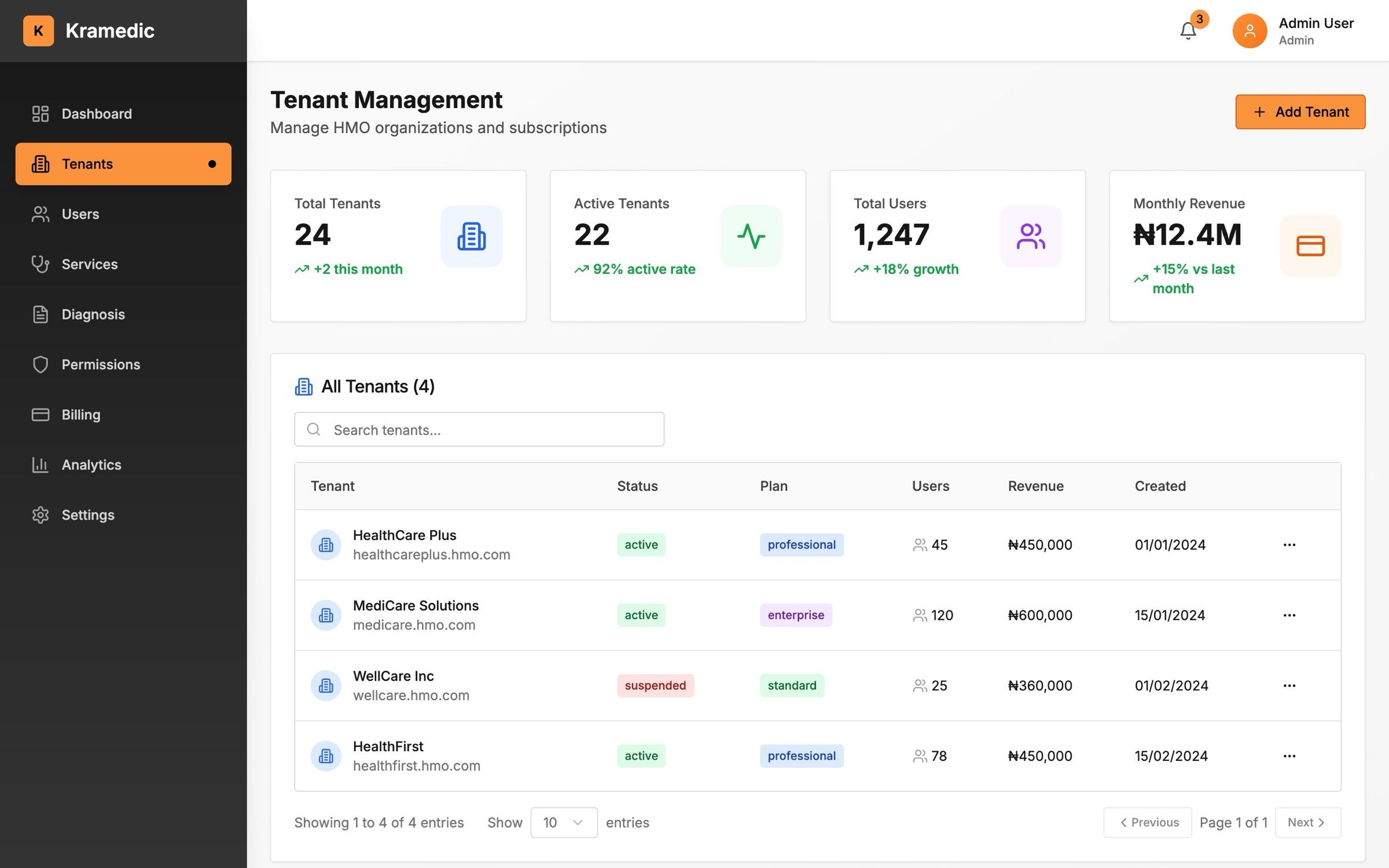
- Admin portal: tenants, services, diagnosis codes, permissions and billing
- Self-service area for corporate clients: plans, usage and users
- A mock API so the frontend could be built and reviewed ahead of the backend
Decisions that shaped it
Claims arrive the way hospitals bill
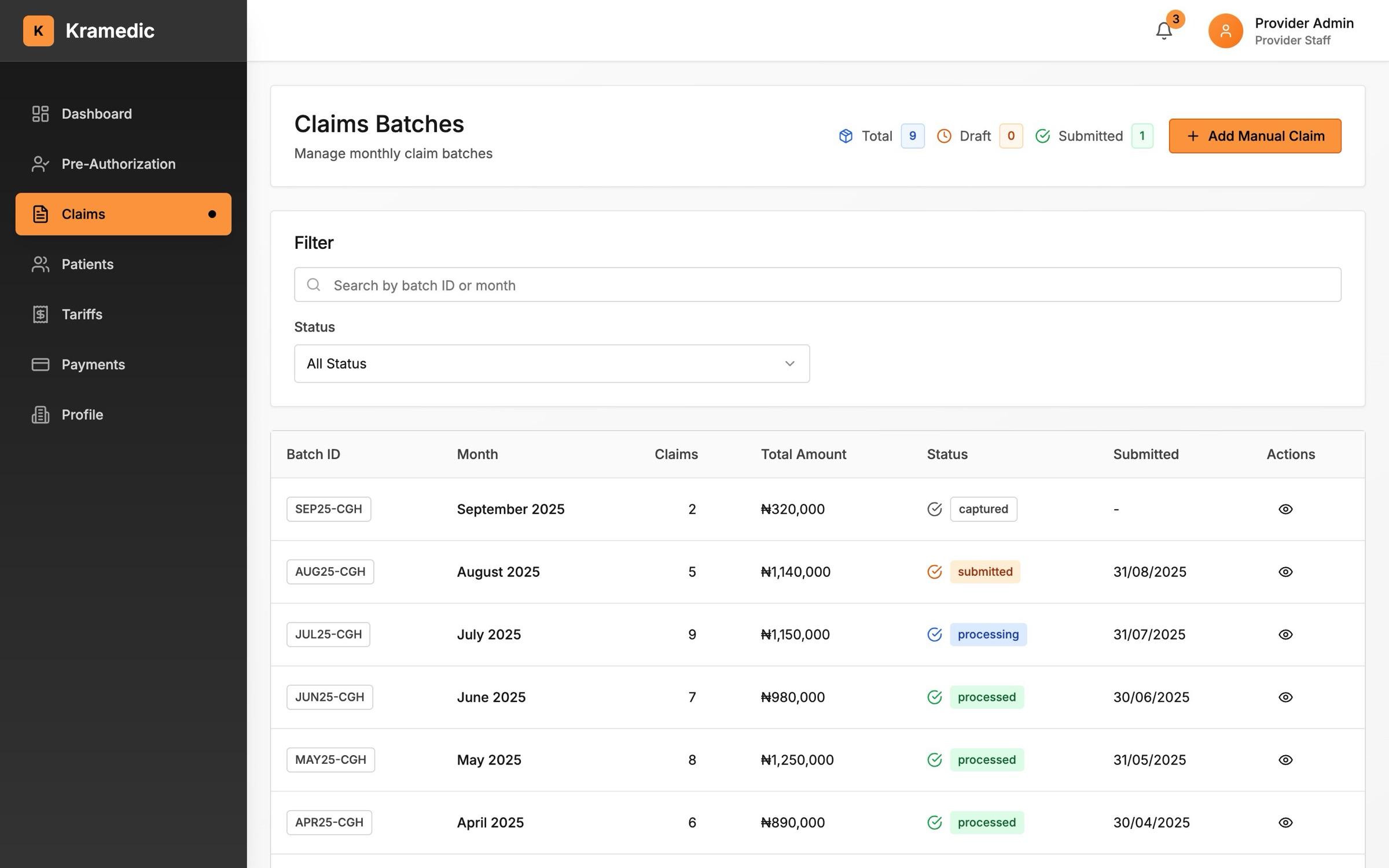
Claims are grouped into monthly batches per hospital, with IDs like AUG25-CGH, and each batch moves from captured to submitted, processing and processed. HMO staff vet a batch at a time instead of hunting through one long list.
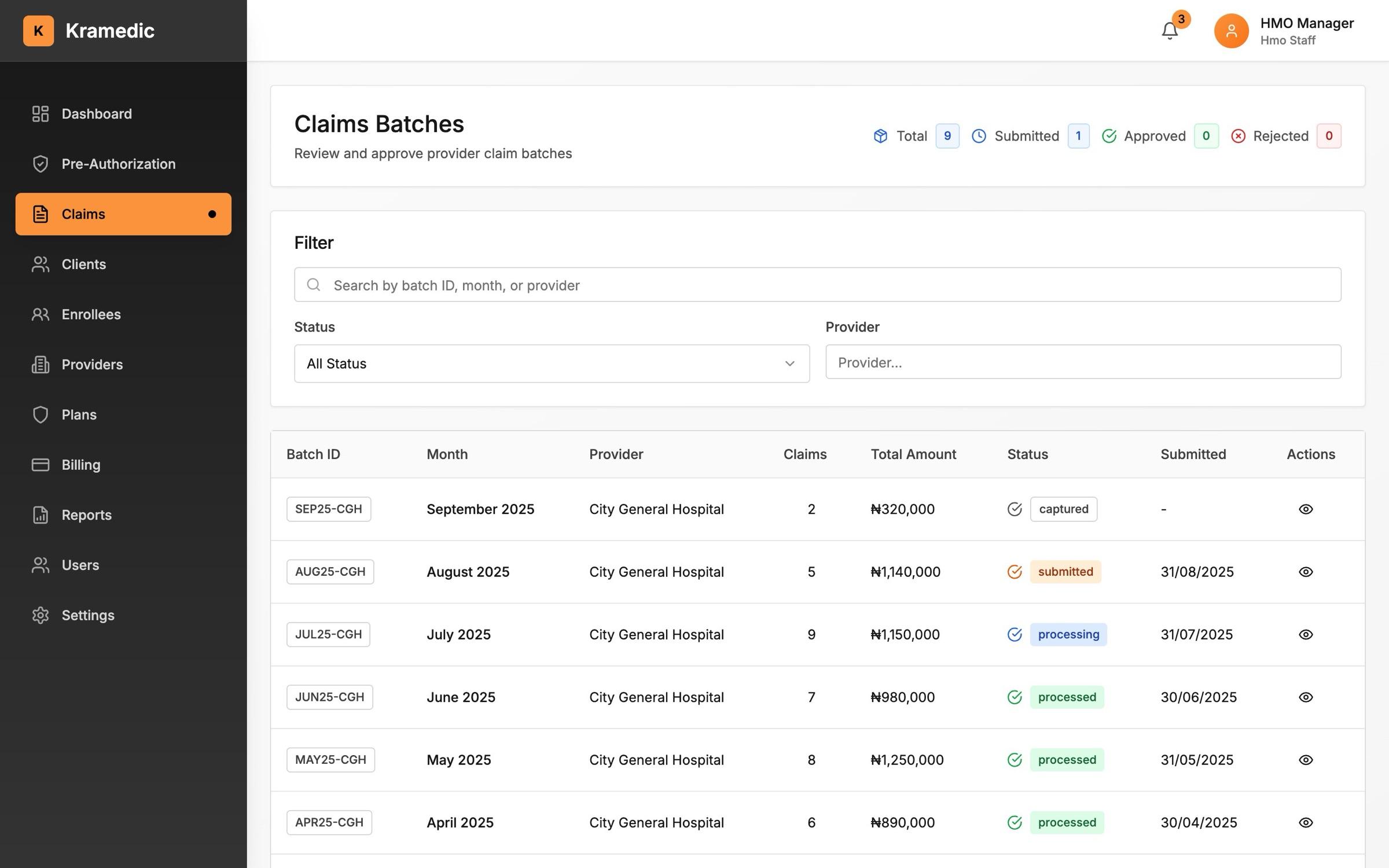
Same data, different jobs
A hospital and an HMO look at the same claim batch, but the hospital needs to add and submit claims while the HMO needs to approve or query them. Each portal gets its own navigation and actions on top of one shared set of components.
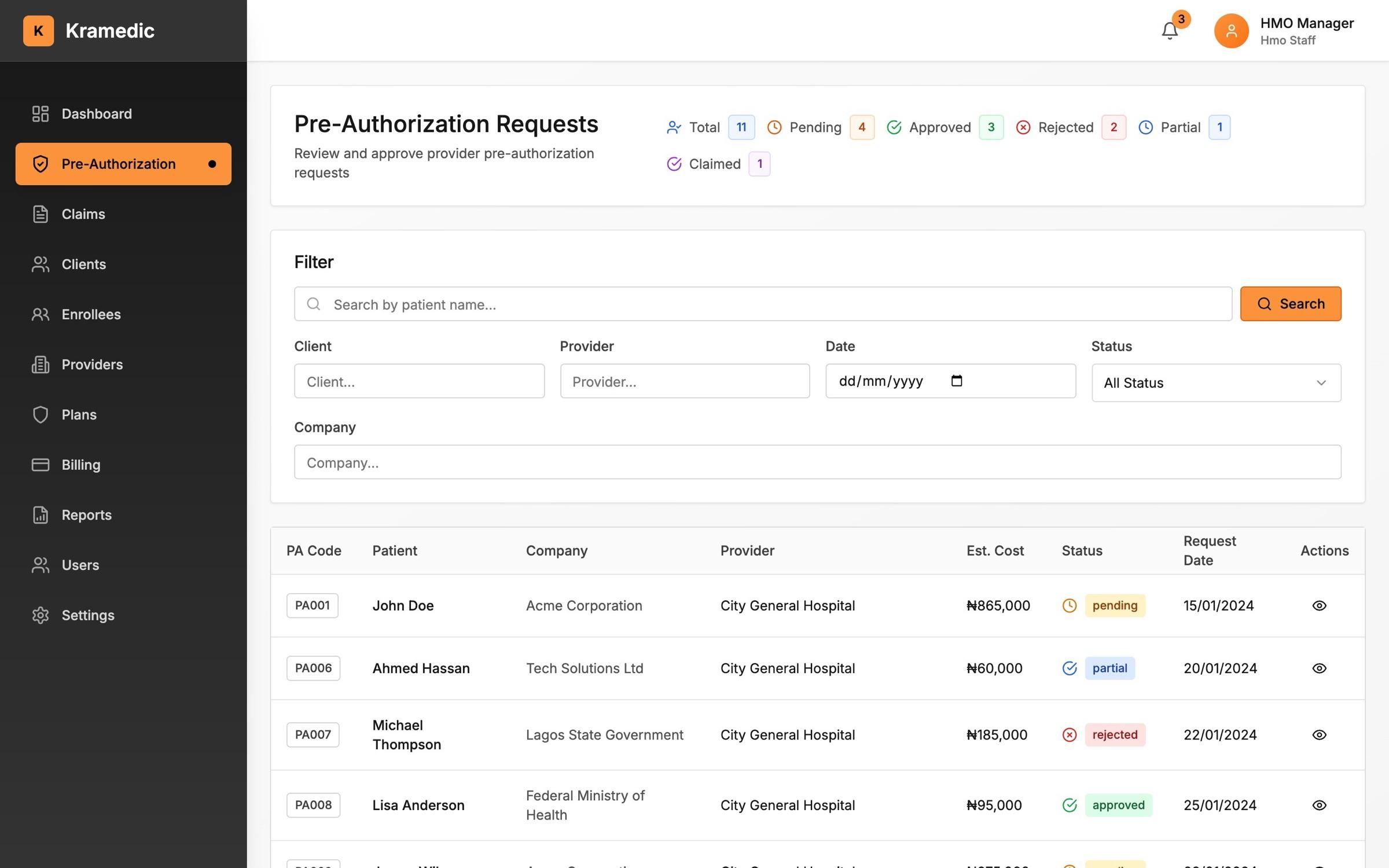
Approvals get their own queue
Pre-authorisation requests sit apart from claims, so a request for urgent treatment is never stuck behind month-end billing.
Frontend first, against a contract
I built against a mock API that mirrors the planned endpoints. The screens could be reviewed with realistic data, in naira, while the backend was still being specified.
More screens
Where it is now
Frontend built and demoable against the mock API.